First: Are You Safe?
Before anything else, decide whether you’re in a safe place to stop. If you’re on a freeway shoulder, a busy boulevard at rush hour, or anywhere with limited visibility, your priorities are different than if you’re in your own driveway. We’ll cover both.
Scenario 1: You’re on a Highway in South Florida
I-95, the Palmetto, the Turnpike — these are the worst places to have a flat. Here’s the safe order of operations:
- Don’t slam the brakes. Ease off the accelerator and let speed drop gradually.
- Hazards on immediately.
- Aim for the right shoulder if possible. Cross only what lanes you absolutely have to, signaling early.
- Pull as far right as you can. Get the entire car onto the shoulder, ideally with two wheels on the grass if available.
- Wheels turned away from traffic so if you’re rear-ended, the car pushes away from the roadway.
- Stay in the car with your seatbelt on if the shoulder is narrow. Most highway shoulder fatalities happen to drivers standing outside the vehicle.
- Drop your live location to a mobile tire service (or share via Google Maps / Apple Maps to a contact).
- Note your mile marker.
- Call Wheel Rush at (305) 897-7030 — we’ll come fix it on the shoulder.
If you feel unsafe waiting alone, dial *FHP (*347) to request a Florida Highway Patrol unit to post behind you for protection while you wait.
Scenario 2: You Discovered a Flat in a Parking Lot
This is the easier version. Most parking lot flats are slow leaks discovered after you’ve parked.
- Inspect the tire. Look for nails, screws, or visible damage.
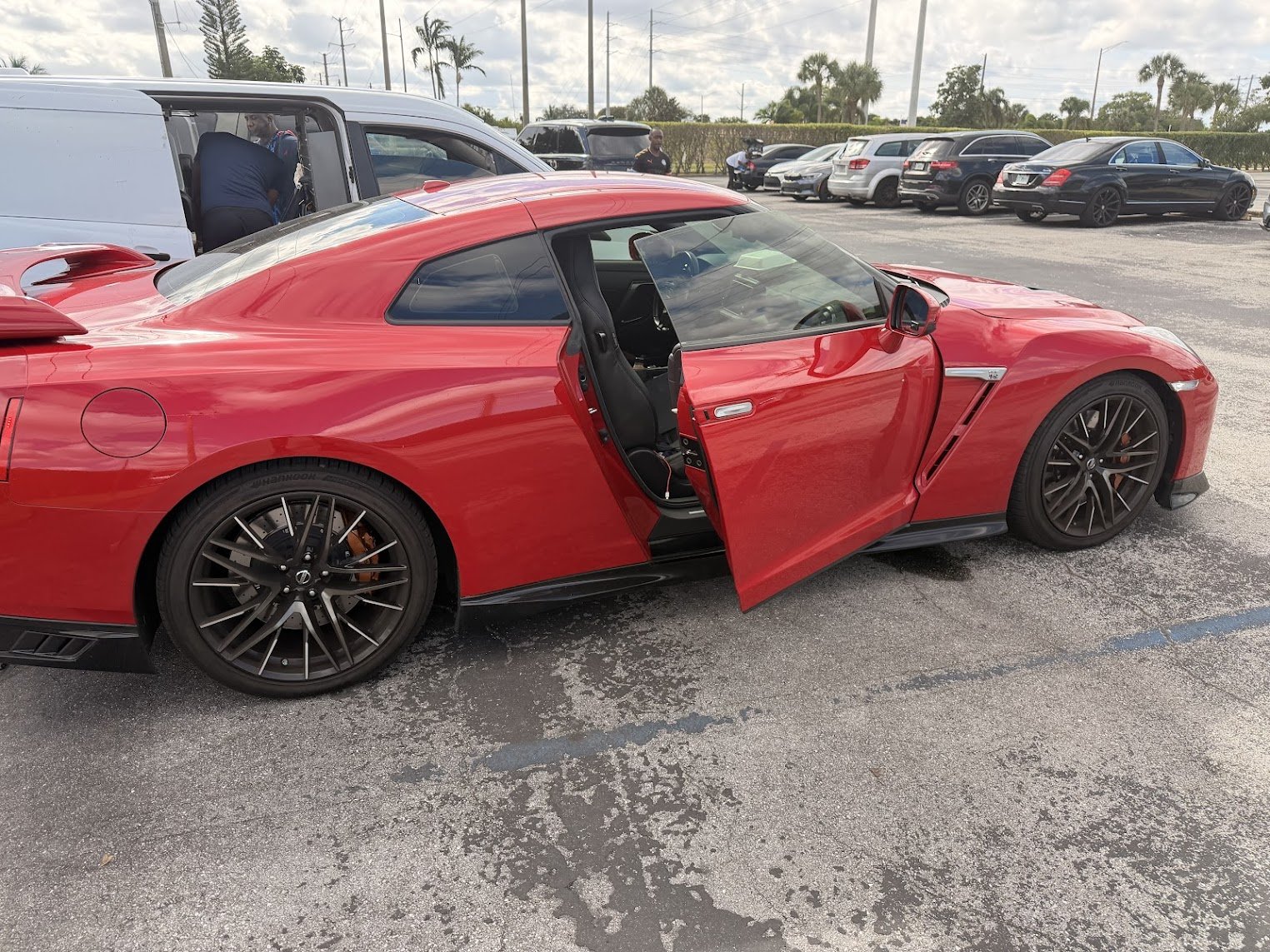
- Decide if it’s safe to drive a few feet to a wider parking spot with room for a service truck.
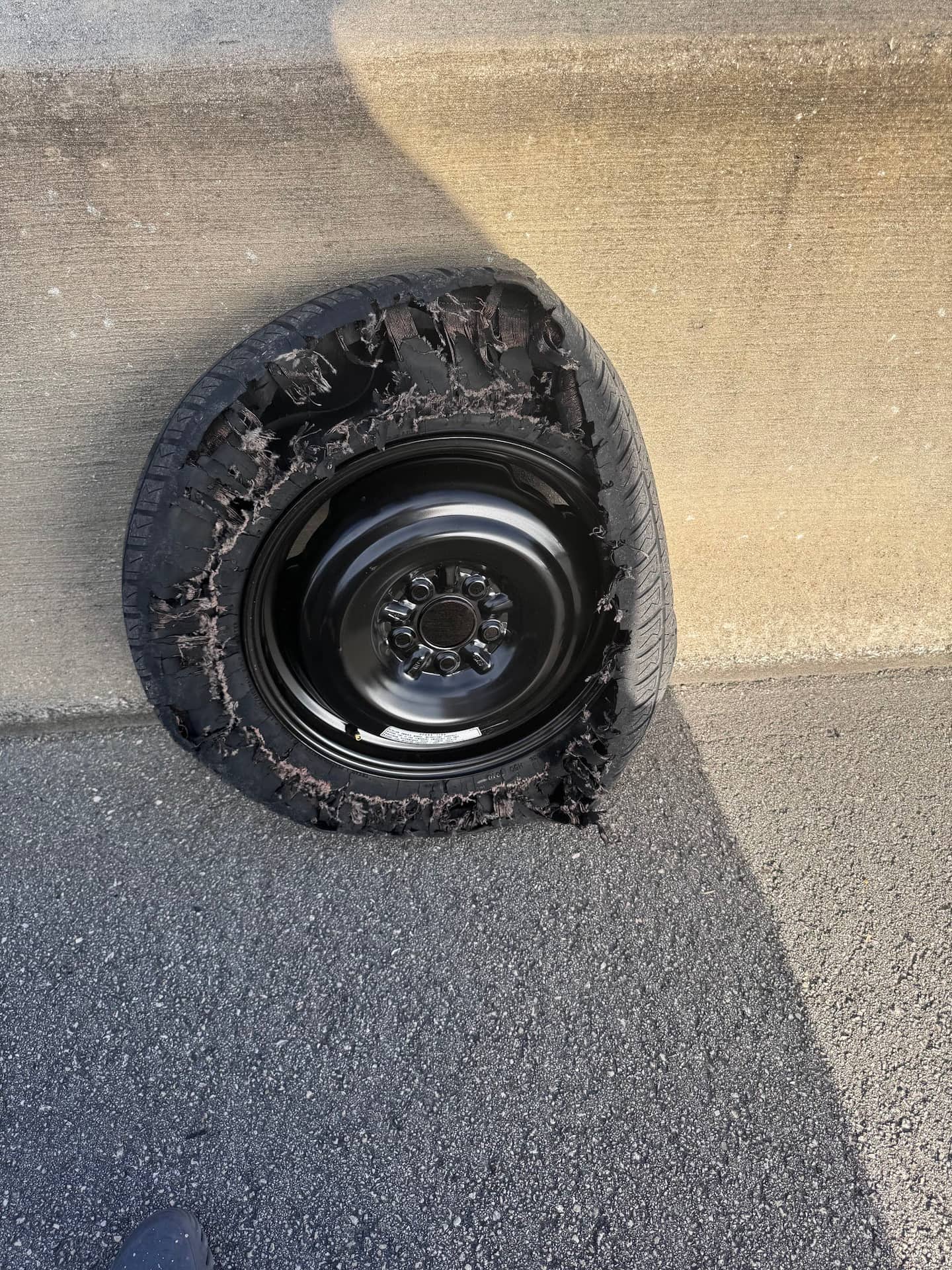
- Don’t drive on a fully flat tire — even short distances can shred the wheel, brake hoses, and ABS wiring.
- Don’t air it up if there’s a visible nail still in it — driving on it can turn a repairable puncture into a non-repairable one.
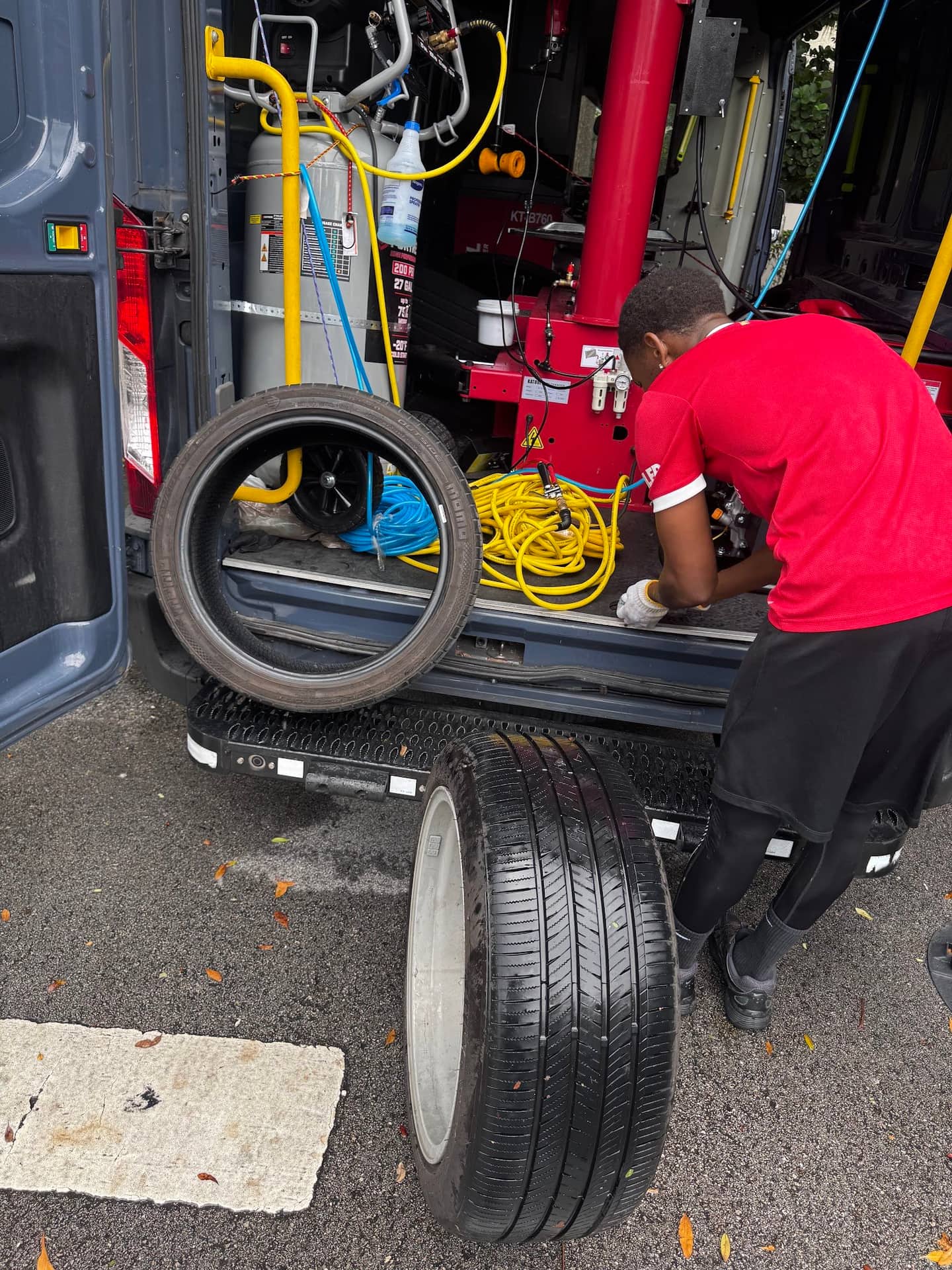
- Call us. We come to you, do the work right there, and you drive away.
Scenario 3: It’s in Your Driveway
The easiest version. Schedule a Wheel Rush service appointment for a time that works for you. Most calls are completed in 30–45 minutes on-site, and we’ll tell you up front whether the tire is repairable or needs replacement.
What NOT to Do
- Don’t drive on a fully flat tire beyond what’s absolutely necessary to get safe.
- Don’t use a tire-inflator can (“Fix-a-Flat”) if the tire still has the nail in it.
- Don’t rely on cheap external plug kits — they can fail under highway speeds.
- Don’t ignore the TPMS light for days. The earlier a slow leak is fixed, the more likely the tire is repairable.
When to Just Replace the Tire
A tire is not repairable if:
- The puncture is in the sidewall (any size, any location)
- The puncture is within 1 inch of the sidewall
- The tire has been driven flat (cord damage)
- The tread depth is below the legal 2/32”
- The tire is older than 6–7 years (DOT date check)
Wheel Rush is honest about repair-vs-replace. If we can repair it safely, we will. If we can’t, we’ll tell you and we can usually source a replacement tire same-day.
Call (305) 897-7030 any time — we answer 24/7.
Need help right now?
We're one call away in Miami-Dade & Broward County.